
Fruit juice excise duty removal to take effect October 1
The removal of the 20 percent excise duty on locally manufactured fruit juices is expected to take effect from October 1, 2026.
The economy expanded 6.2 percent in first half-2026, supported by a sharp recovery in oil and gas production, strong services activity and rising investment although growth remained concentrated in a few sectors, Ghana Statistical Service (GSS) said.
The country is seeking to deepen local value addition across its horticulture and wider agribusiness sectors as non-traditional exports (NTEs) hit a record US$5.006billion in 2025.
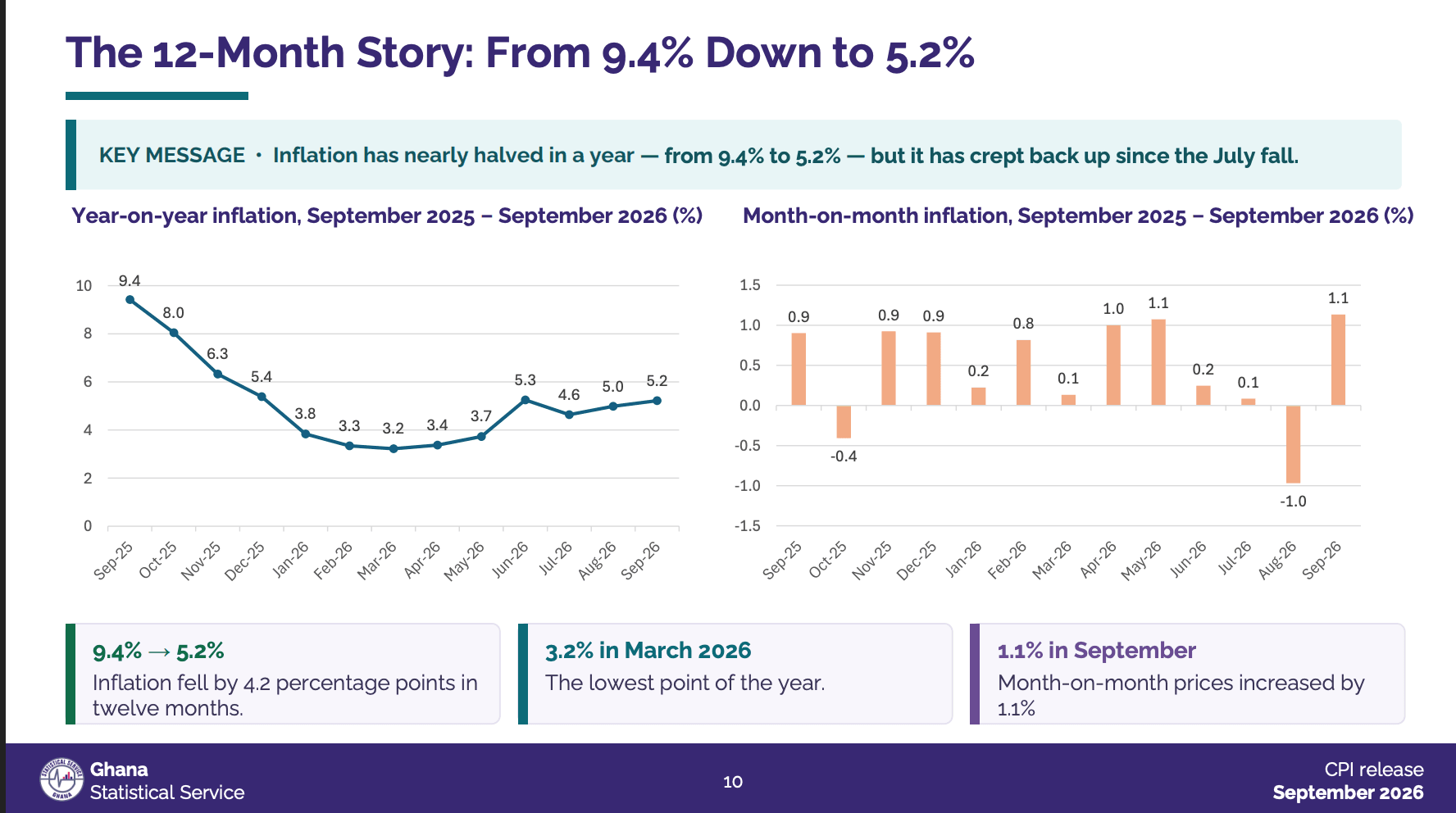
Ghana’s inflation pressures are increasingly shifting away from food and imported goods toward domestically-driven services, housing and utility costs, even as the overall price level remains substantially below where it stood a year ago.
President John Dramani Mahama’s proposed Feed the Industries policy is seeking to bridge one of the biggest gaps in Ghana’s industrialisation drive: the disconnect between agricultural production and domestic processing.
Ghana’s GH¢46.1 billion trade surplus in the first quarter of 2026 masked a deficit when trade is measured in real terms, highlighting the extent to which higher export prices — particularly for gold — rather than increased volumes are supporting the country’s external position, the Ghana Statistical Service (GSS) said.
Perseus Mining Ghana Limited (PMGL) has paid GH¢391million (US$35million) in dividends to the Government of Ghana, representing the State’s entitlement from its 10 percent equity stake in the company.
Get the latest economy news delivered to your inbox.