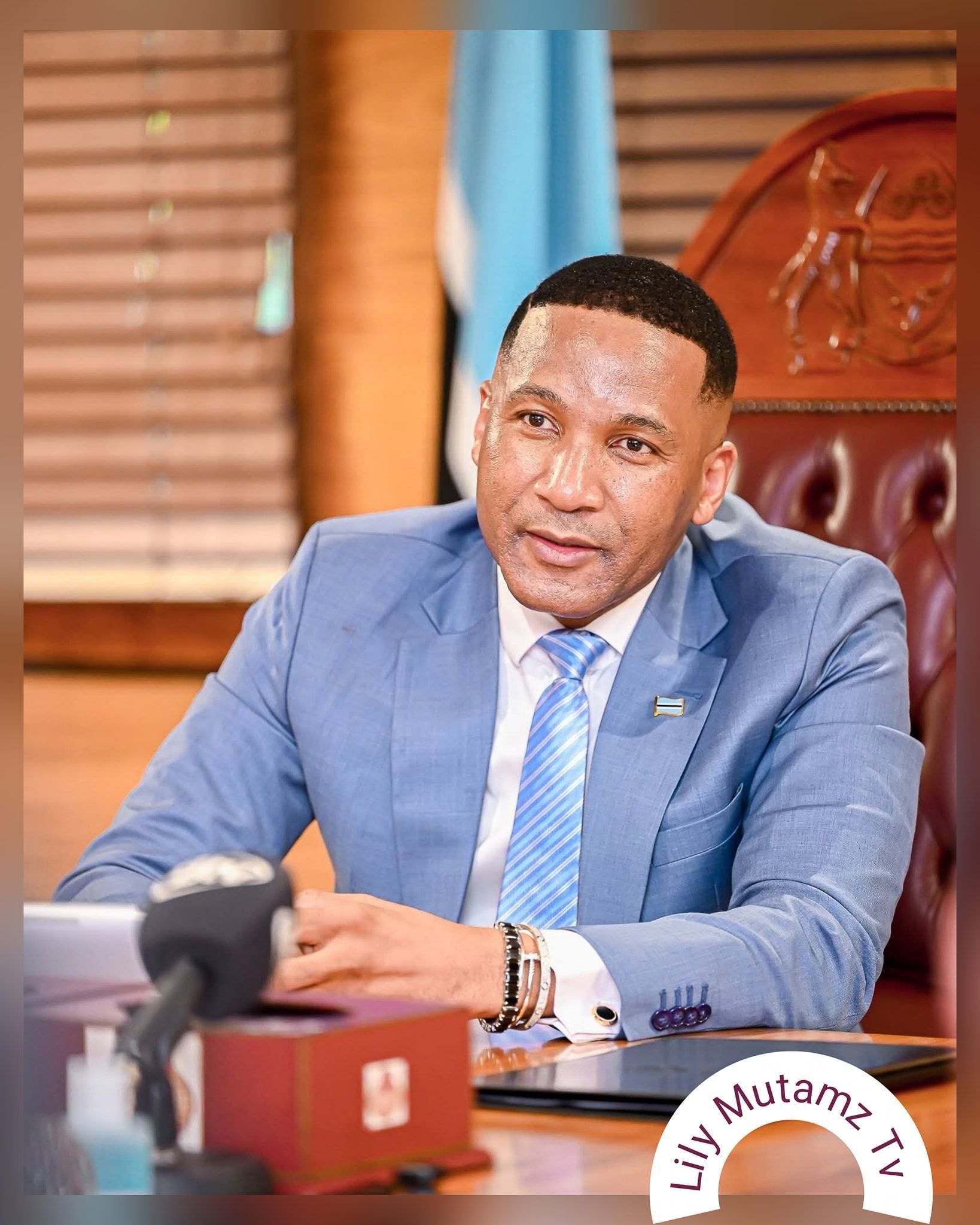
African Perspectives: Botswana sets out 186-project blueprint in bid to double economy by 2036

0

Botswana has unveiled the full architecture of its Botswana Economic Transformation Programme, a structured national effort to nearly double the size of the economy and achieve high-income country status within eleven years, anchored on 186 investment-ready projects spanning nine sectors and requiring cumulative private investment of BWP 514 billion by 2036.

The programme was presented at the African Markets Conference 2026, where Botswana laid out both the ambition and the mechanics of an economic overhaul that the government describes as requiring an entirely different growth trajectory from the one that has defined the country’s development since independence.

The diagnosis: An economy built on one commodity

The starting point for the BETP is a frank reading of Botswana’s structural position. With a gross national income per capita of US$7,750 in 2024, the country sits at the upper-middle-income threshold,  a respectable position by African standards, but one that masks a development model that has remained overwhelmingly dependent on diamond revenues since the 1970s.

The historical compound annual growth rate in Gross National Income (GNI) per capita between 2000 and 2024 was 3.9 percent. To reach the World Bank’s projected high-income threshold of US$15,730 by 2036, Botswana must sustain 6.1 percent annual GNI per capita growth for eleven consecutive years,  a rate the Ministry of Finance acknowledges will require what it calls “business unusual.”

The vulnerability in the current model is well-documented: when diamond revenues contract, as they did sharply in 2024 when De Beers, the dominant producer, faced a global rough diamond market slump, the fiscal position deteriorates rapidly. The BETP is, at its core, an attempt to diversify the productive base before that vulnerability becomes a structural crisis.

Unemployment reinforces the urgency as district-level data from Statistics Botswana show unemployment rates ranging from 21 percent in Ghanzi to 32 percent in the Central District as of the first quarter of 2024. The programme’s employment target of 512,000 jobs created across the 186 identified projects, is calibrated against that reality.

The programme’s architecture

The BETP was designed through a structured process that began with a public call for ideas in August 2025, which generated 6,925 project submissions. Those submissions were filtered through a two-stage lab process — involving public and private sector stakeholders in collaborative problem-solving sessions — that narrowed the field to 246 entry point projects and then to a final 186. Projects were prioritised on the basis of Gross Domestic Product (GDP) contribution, investment value, job creation potential, inclusivity, industry development, and sustainability.

The resulting portfolio is spread across agriculture (26 projects), energy and mining (31), education (27), manufacturing (22), tourism (21), infrastructure (26), healthcare (18), financial services and digitalisation (6), and social protection (9). Each project has been assigned an implementing agency, a funding profile, an implementation timeline, and an assessment of readiness,  ranging from conceptual stage to ready for immediate implementation.

The Cabinet-endorsed strategic vision, described in the programme as its “True North,” defines the end state as a digitally-enabled, export-driven, economically diversified Botswana where every citizen is employed, empowered, and fulfilled, with GNI per capita of at least US$15,730 by 2036.

The sectoral bets

The energy sector carries the most transformative ambition. Botswana’s current installed electricity generation capacity is 965 megawatts, nearly all of it coal-fired. The BETP targets installed capacity of more than 10,000 megawatts by 2036, with renewables rising from 11 percent to 50 percent of the energy mix by 2030 and the energy sector’s share of GDP growing from 0.8 percent to more than 10 percent. The grid upgrade programme alone requires BWP 6,739 million in private investment between 2026 and 2030, structured through Design-Finance-Build-Operate-Manage-Transfer arrangements with the Botswana Power Corporation. Solar projects in the pipeline include a proposed 2,000-megawatt solar farm with 1,000-megawatt battery storage capacity, and a 1,000-megawatt solar farm designated for export.

In mining, the focus shifts from volume to value. Non-diamond products currently account for 22 percent of total mineral exports; the target is 50 percent by 2036. The proportion of extracted minerals retained for local beneficiation is to double from 15 percent to 30 percent by 2030, with copper refinery projects, battery-grade manganese production, and iron ore beneficiation among the headline initiatives. Total mining sector output is targeted to grow from BWP 27 billion to BWP 60 billion over the period.

Infrastructure investment is organised around positioning Botswana as a regional logistics hub. The flagship rail project, a 430-kilometre link from Mosetse to Kazungula Bridge connecting with Zambia’s Livingstone, combined with a 113-kilometre link from Mmamabula to Lephalale in South Africa, would create a continuous corridor from South Africa through Botswana to Zambia and the DRC.

The combined projects are projected to generate approximately 2,500 direct jobs and contribute BWP 3.1 billion to GDP, with BWP 26,746 million in private funding required between 2027 and 2030. Separately, the rehabilitation of Botswana’s 641-kilometre core railway mainline, which the BETP notes is currently operating at 25 percent of cargo capacity and has suffered a 41 percent decline in annual revenue, requires BWP 600 million in private investment over 2027 and 2028.

In agriculture, the programme targets a reduction in food import growth from 10 percent to 5 percent annually by 2036, and an increase in food exports’ share of total non-mining exports from 2 percent to 5 percent. Manufacturing is to raise its share of total exports from 11.2 percent to 23 percent. Tourism arrivals are targeted at 2.7 million by 2033, from a baseline of 1.18 million in 2023, with tourism’s GDP contribution rising from 1.8 percent to 4.2 percent by 2030.

Financing and the capital gap

The BETP’s reliance on private capital — BWP 514 billion over eleven years, with minimal public or donor funding in the project profiles presented — reflects both a fiscal constraint and a deliberate design choice.

The government is positioning the programme as a deal-flow vehicle rather than a state-led spending programme. Project owners have been taken through roadshows at the African Financial Services Investment Conference in London in October 2025, a non-deal roadshow hosted by the Botswana Stock Exchange in August 2025, and a domestic media briefing in November 2025 at which all 186 projects were presented. The BETP website attracted engagement from more than 20 international financiers, including institutions from Europe, the United States, the UAE, and Japan.

The financing challenge, however, is structural. Domestic credit to the private sector in Botswana stood at 30.1 percent of GDP in 2023 — well below Namibia at 61 percent, Mauritius at 67.2 percent, South Africa at 91 percent, and the upper-middle-income country average of 145.3 percent. The MSME financing gap, at 31 percent of GDP, is the second-largest in the regional comparison set, exceeded only by Eswatini. Without a deeper domestic capital market, the BETP’s financing model depends heavily on attracting international capital to projects, many of which remain at the conceptual or early planning stage — a structural vulnerability that the programme itself acknowledges but does not fully resolve.

The legislative agenda

Recognising that projects alone are insufficient without a supportive regulatory environment, the BETP has identified 32 legislative and regulatory reforms required across sectors. These range from an Energy Act reform to create a renewable energy market framework and a Hydrogen Act governing production, storage, and distribution, to agricultural reforms including warehouse receipts legislation, index-based climate insurance, and the replacement of blanket produce export bans with tariff-rate quota mechanisms.

Financial services reforms include the proposed split of the Non-Bank Financial Institutions Regulatory Authority into two distinct entities and the creation of a national reinsurance framework through the Botswana National Reinsurance Corporation Bill. Cross-cutting reforms include structured work permit subclasses for skills and project-based employment, and a mandate to disclose reasons for rejected permit applications.

The scale of the legislative agenda is itself a signal of how substantially the current framework constrains private investment. Whether the political bandwidth exists to move 32 reforms through the relevant ministries and the Attorney General’s chambers concurrently with programme implementation is a question the BETP does not directly address.

What the programme does represent, taken as a whole, is the most detailed and publicly accountable statement of economic intent that Botswana has produced in a generation. The architecture is credible, the project pipeline is concrete, and the financing outreach is active.

Credit: Standard Bank


Discover more from The Business & Financial Times

Subscribe to get the latest posts sent to your email.

Leave a Reply