


His thoughts come as Finance Minister, Dr. Cassiel Ato Forson, prepares to present the review to Parliament this morning; the first to be delivered by the current administration without an International Monetary Fund (IMF) programme running behind it.
The Extended Credit Facility (ECF) concluded earlier this year. What replaces it is the Fund’s Policy Coordination Instrument (PCI), monitoring without money. There are no disbursements to withhold and no board reviews functioning as enforcement. The discipline that held through three years of adjustment now rests on domestic political will, eighteen months ahead of an election and 18 months ahead of a debt wall.
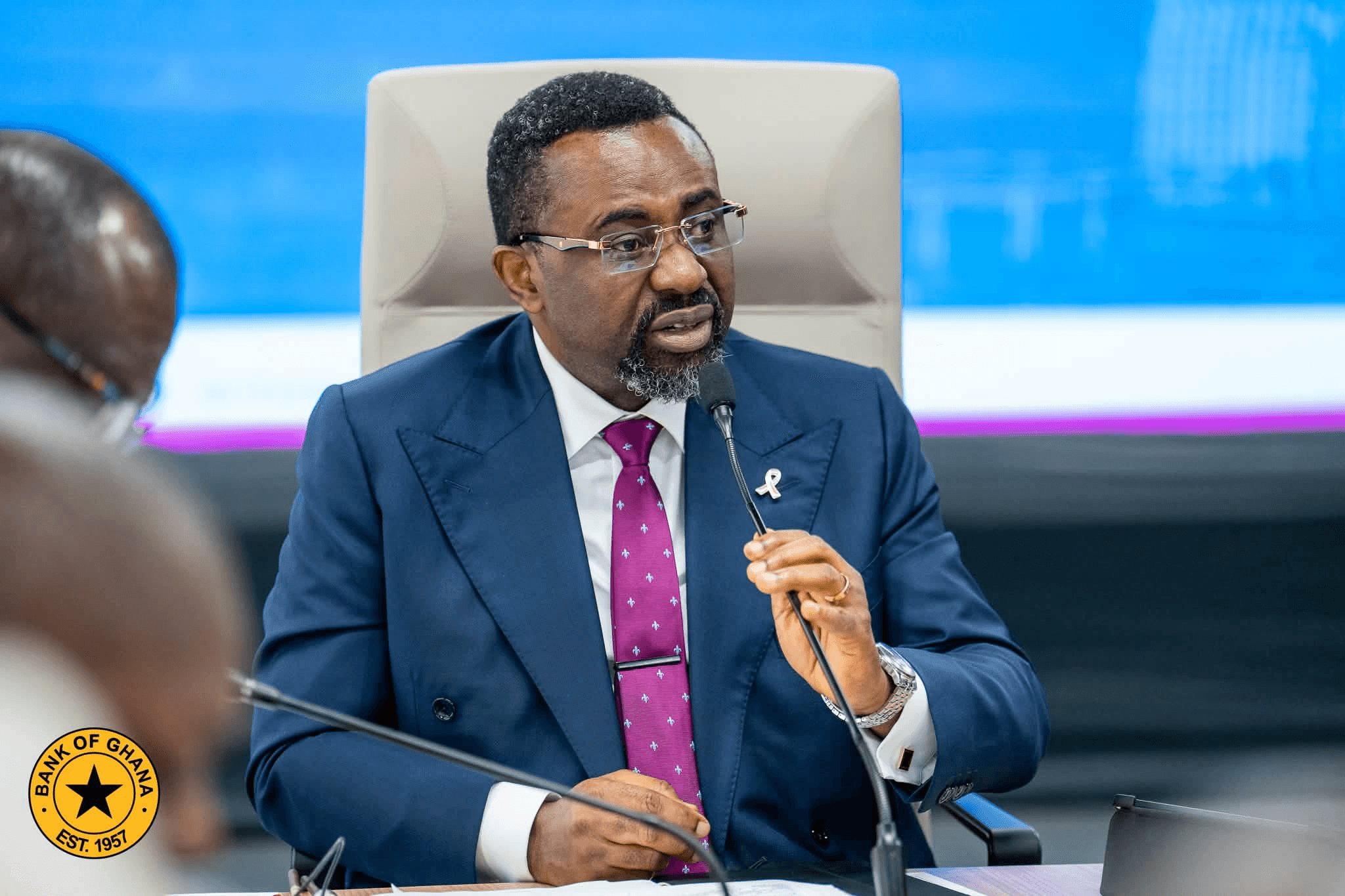
“This review is the government’s chance to show its promised reset can hold without a safety net beneath it,” he said in an assessment dubbed ‘No more referee-six tests for Ghana's economic reset.’
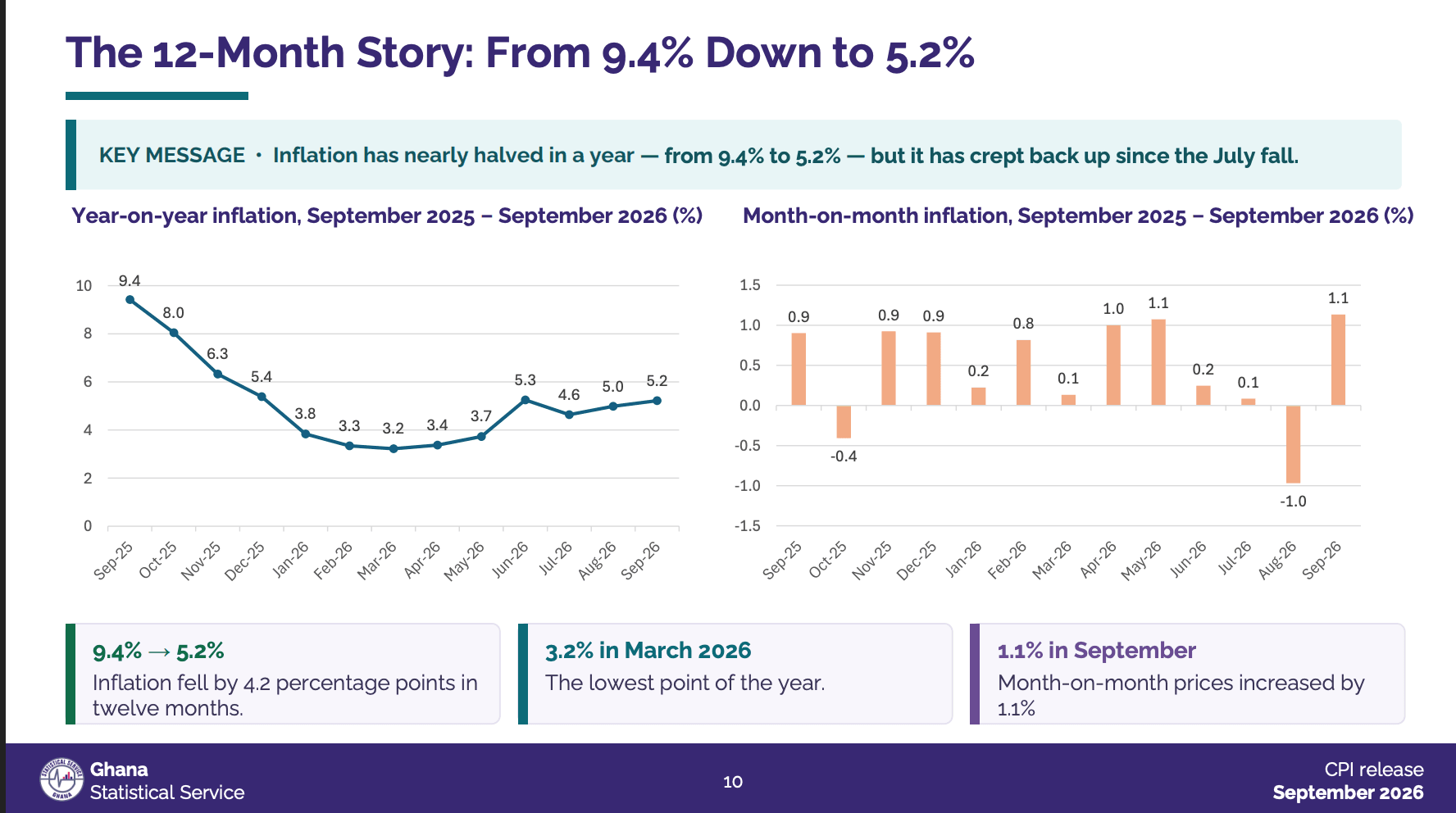
The numbers arriving at Parliament are mixed. Inflation, which touched 3.2 percent in March, a low last seen in 1985, has reversed for three consecutive months to 5.3 percent in June. The primary balance stood at 1.2 percent of Gross Domestic Product (GDP) through March against a 1.5 percent full-year target. Gross international reserves fell from US$14.2 billion in March to US$12.9 billion in June, a US$1.3 billion drawdown in a single quarter that took import cover from 5.7 months to 5.0.
“Holding the line on spending amid real infrastructure, social and political pressure is itself an achievement worth recognising,” Mr. Ayippey said.
But sceptics, he acknowledged, will call this restraint rather than transformation, and that debate is legitimate. Discipline must survive the political cycle, and better headline numbers must become better jobs and living standards.
He sets out six tests the review must pass including but not limited to a clear plan for the impending debt wall.
Show the plan for the 2027–28 debt wall
He noted that Ghana faces roughly GH¢50.3 billion in domestic debt maturities in 2027 and GH¢45.8 billion in 2028, alongside Eurobond repayments of US$1 billion in 2026 and US$2 billion in 2027. These are fixed dates. They will not move.
The good news, he added, is that it has rarely been cheaper to prepare. The 91-day Treasury bill has fallen from 28.4 percent in January 2025 to about 5.9 percent today, and April's post-default seven-year bond raised GH¢2.7 billion at 12.5 percent. The plan to raise GH¢20.2 billion in seven-to-ten-year paper by year-end is the right instinct; a functioning yield curve is also a pricing benchmark for corporate paper.
The FBN Bank Head of Research, Analytics and Strategy said he expects today’s review to provide disclosure on three things: the current balance in the revived Sinking Fund and the specific flows feeding it; progress against the GH¢20.2 billion target at the halfway mark; and a quarterly bond issuance calendar, requested since November and still overdue.
Recent Treasury bill auctions have undershot and yields are drifting up weekly. A published calendar remains the cheapest confidence-building tool the Ministry has, he noted.
Name what replaces the IMF’s discipline
Completing the ECF, he conceded, is a genuine milestone, and the shift to the PCI is a sensible bridge. But Ghana’s fiscal discipline has historically been held under supervision and slipped without it. An election cycle is the real test of whether that pattern has broken.
“The review should confirm the primary balance at half-year against the 1.5 percent target, and whether revenue is tracking the GH¢268 billion goal. The single most important promise in this Budget is zero central bank financing in 2026. A clean half-year confirmation would outweigh any speech,” Mr. Ayippey stated.
The inflation turn
Inflation fell from 23.5 percent in January 2025 to 3.2 percent in March 2026, then reversed to 5.3 percent by June, driven by transport, rents and school fees. Services inflation is running at 9.4 percent. Renewed tension in the Strait of Hormuz has pushed Brent crude back above US$89 after easing to US$84 in June, and the nation imports almost all its refined fuel.
The Bank of Ghana (BoG) has held the policy rate at 14 percent since May and June’s 5.3 percent still sits inside the Budget’s 8 percent end-year target, but the direction and pace deserve a straight answer.
“What is the current assumption for fuel prices, and what shields the Budget if the conflict persists? An open forecast revision beats a quiet one,” he insisted, adding that credibility depends on candour here.
Prove the cocoa reset can pay farmers on time
For 32 years an offshore syndicated loan financed each cocoa season, pledging 70 to 92 percent of the harvest to foreign lenders and costing over US$150 million in interest on the 2023/24 facility alone. Its 2024/25 replacement — upfront payment by global buyers, left farmers waiting when traders held back. From 2026/27, COCOBOD will fund the crop domestically in cedis through a roughly US$1 billion bond and commercial paper programme.
The timing is unforgiving. The international cocoa price has more than halved, from about US$9,155 a tonne in June 2025 to US$4,272 in June 2026, squeezing revenue that must also service COCOBOD’s existing GH¢32 billion debt, a contingent liability that sits on the sovereign's shoulders whether or not it is counted there.
“I want a clear confirmation of the issuance timetable and whether farmer arrears from the failed 2024/25 season are fully cleared. And I want an explanation of how the domestic market absorbs cocoa bonds alongside the GH¢20.2 billion sovereign programme and the GH¢10 billion Big Push bonds without pushing yields back up. Three issuers, one investor base, one balance sheet capacity. Something gives,” he stressed.
Level on gold and the cedi
The cedi’s recovery from about GH¢16 to the dollar in October 2024 to GH¢11.45 by May 2026 is real and visible in the price of appliances, medicine and cars. It is also being tested, closing at GH¢11.55 on 17 July, he said.
Record gold prices did much of the work behind that recovery, and gold’s monthly average has since fallen from its February peak to about US$4,240 an ounce in June as markets price a possible Fed move in September. The reserve drawdown followed.
A windfall saved is a buffer; a windfall spent is next year's crisis.
“What gold and cocoa prices does the Budget now assume? How much of the reserve build is being treated as cyclical windfall rather than permanent income? And what is the contingency if gold falls a further 15 percent?” Mr. Ayippey quizzed.
Turn cheap money into jobs, not just cheap borrowing
Lower rates are moving the banking system. Private sector credit grew 41.2 percent year-on-year to about GH¢119.6 billion by June, roughly 34 percent in real terms, while non-performing loans fell from 23.1 percent to 16.1 percent. With the policy rate down from 28 percent to 14 percent, conditions for a genuine lending cycle exist for the first time in five years.
But credit growth is not living standards. The review should show utilisation of the GH¢10 billion Big Push infrastructure bond and job numbers from the 24-hour economy programme, delivery, not plans, and numbers with a methodology attached.
There is a cost to this rotation that deserves attention. A saver who placed GH¢10,000 in a 91-day bill now earns about GH¢147 over three months, against roughly GH¢600 two years ago. That is a near-zero real return at 5.3 percent inflation, though savers were losing money far faster in real terms when inflation ran above 20 percent. The point is not that yields have fallen. It is that nothing has been put in their place.
“Savers financed this crisis. The review owes them a plan, not a footnote,” Mr. Ayippey said
Longer-dated bonds, collective investment schemes and the Ghana Stock Exchange all offer a better path for that capital, and the Budget should point to it explicitly.
“The government has earned a measure of trust: inflation brought under control, the bond market reopened, the Fund programme completed, the currency stabilised. The second half is harder. Inflation is creeping back, the Gulf is volatile, IMF oversight is winding down, and the 2027 debt wall is eighteen months away,” he said.
“Today, Ghana does not need celebration. It needs hard numbers, an honest forecast, and delivery figures on the programmes that touch daily life,” he further stated.


Comment guidelines
Please keep comments respectful. Use plain English for our global readership and avoid using phrasing that could be misinterpreted as offensive. By commenting, you agree to abide by our community guidelines and these terms and conditions. We encourage you to report inappropriate comments.
No comments yet. Be the first to share your thoughts.