

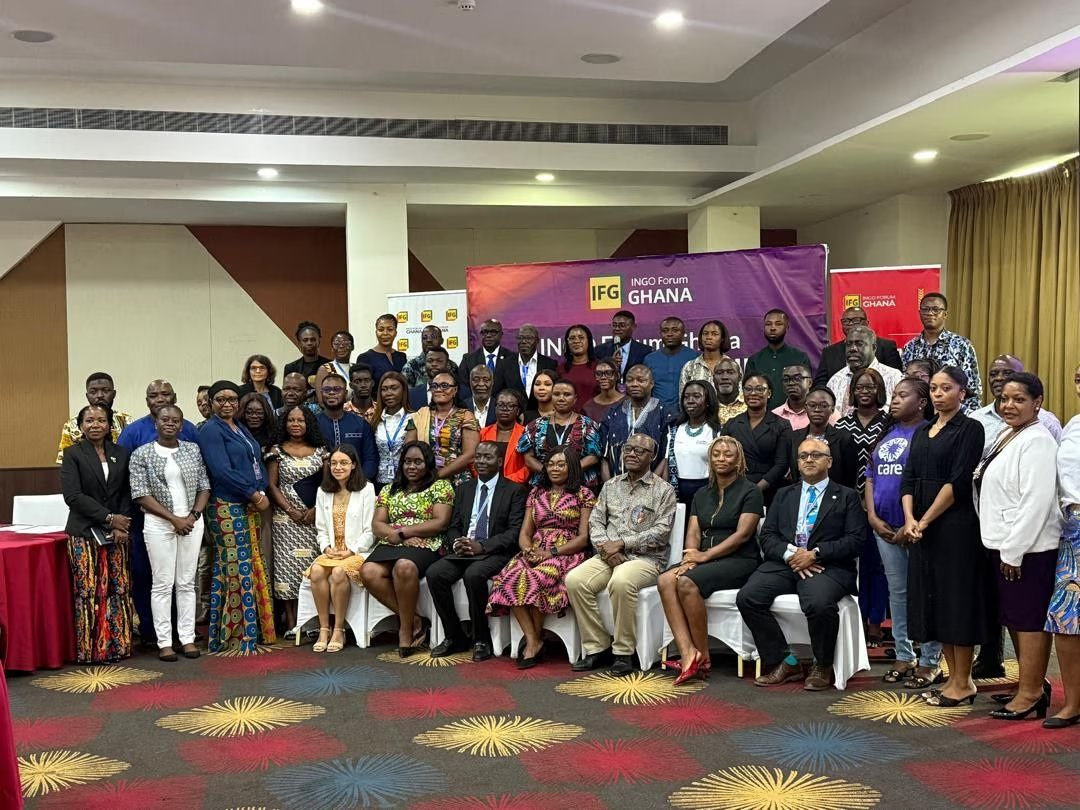
INGO's push for localisation and new financial modules

0 views
Related Coverage: Top Headlines
News
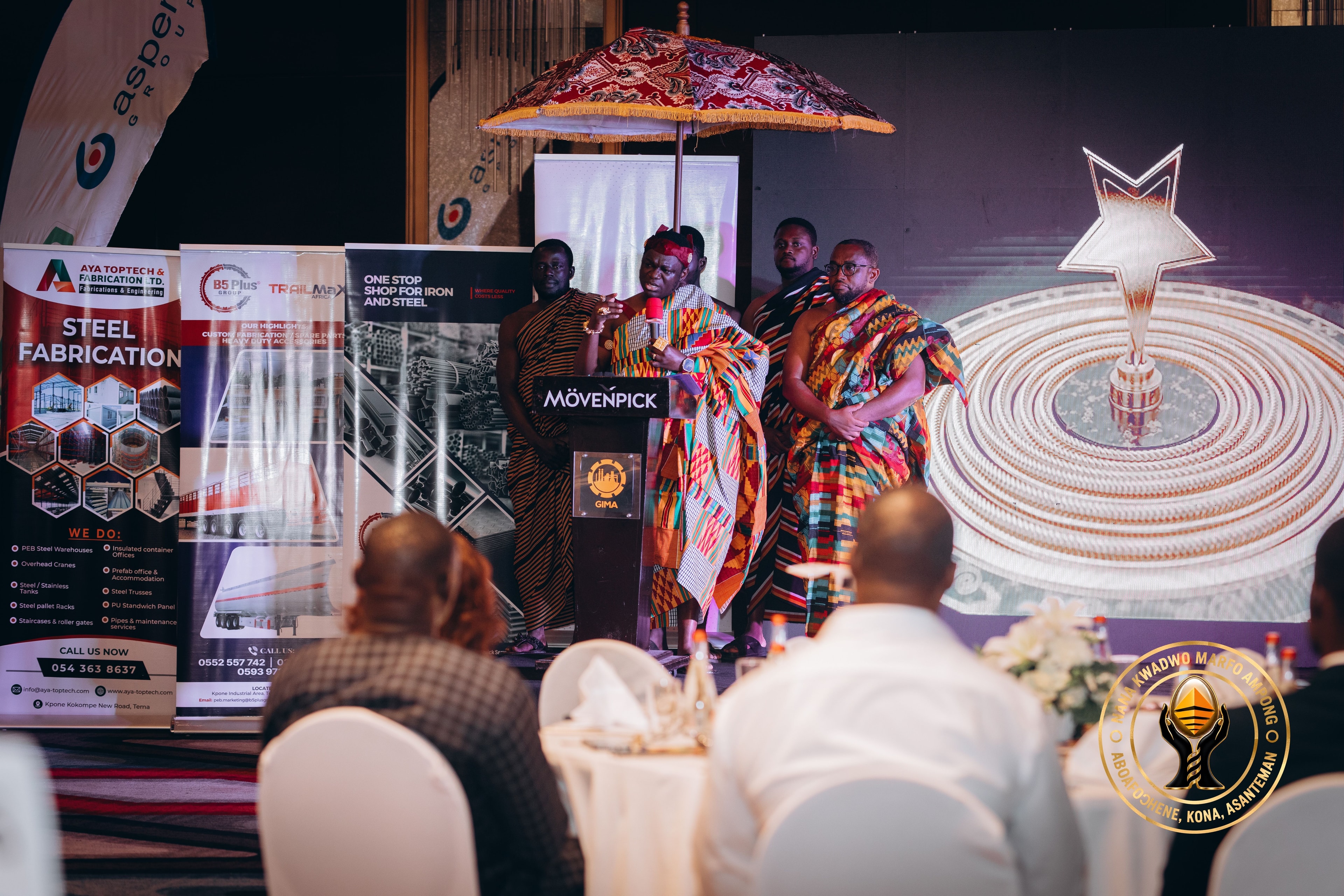
Made in Ghana, but Trusted Everywhere - Royal Keynote Address at the Ghana Industries and Manufacturing Awards 2026
Ghana does not need to manufacture everything. It must identify where it can compete, build world-class capability, and earn a dependable place in global markets.

News
Before AI becomes Intelligence, it becomes Infrastructure.
AI may look like software, but its foundations are physical, such as land, electricity, fibre, cooling, capital and skills. For Ghana, the real opportunity may lie in learning to supply what the AI economy cannot function without.

Features
Ho West’s hidden waterfalls: The untapped business opportunity in tourism economy
There is a tourism paradox unfolding in Ghana’s Volta Region almost every day, and now it is about Ho West.
Features
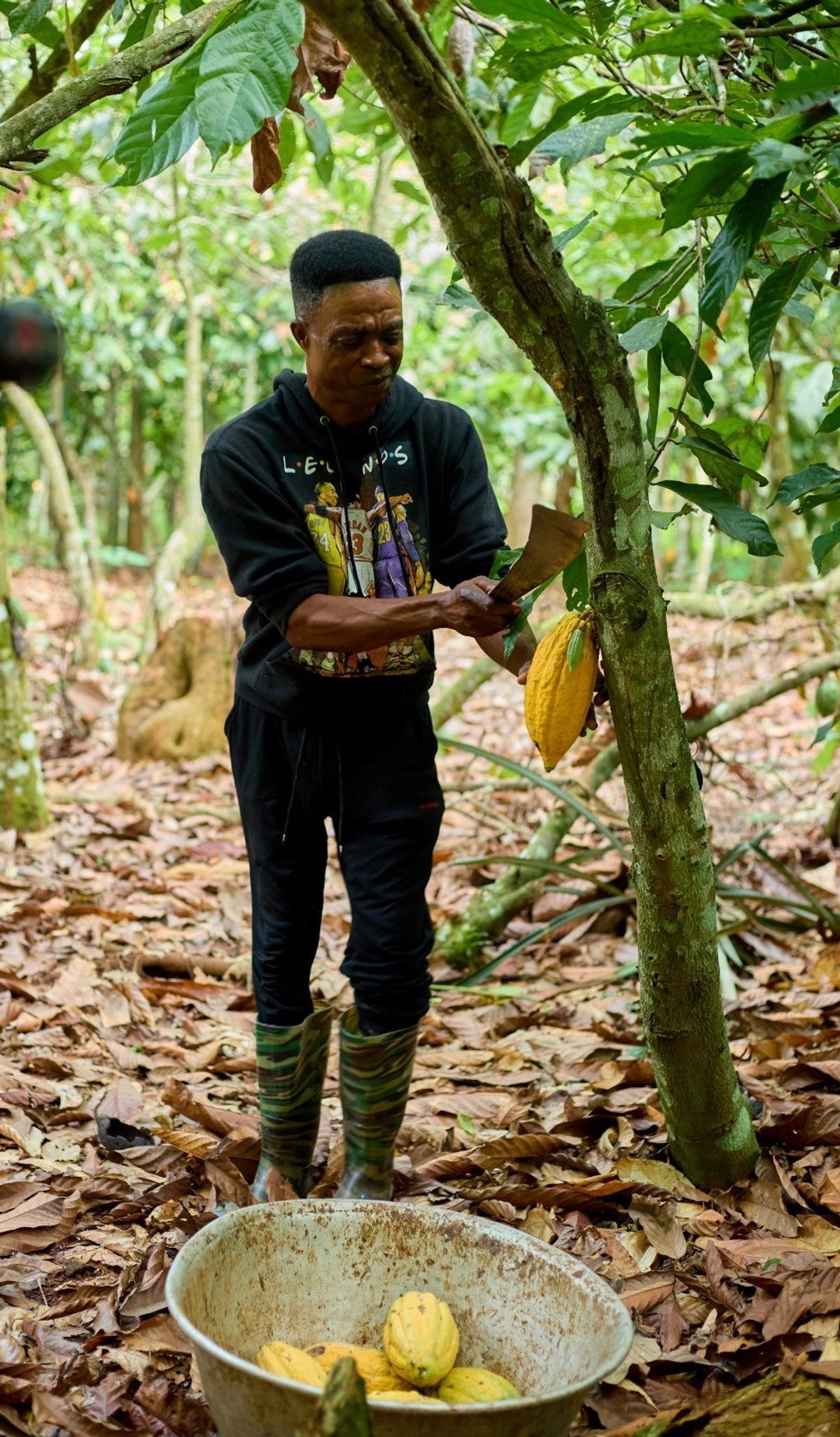
When cocoa prices fall, farmers shouldn’t have to bear the cost
A day before I was elected Chair of the Fairtrade Africa Board, I sat in a room in Accra with cocoa farmers, leaders of cocoa cooperative, traders, policymakers and other stakeholders in the cocoa space,

Features
Hollard Life Assurance appoints Sosthenes Konutsey as Managing Director
Hollard Life Assurance Ghana, a subsidiary of Hollard Ghana, has appointed Sosthenes K. Konutsey as its new Managing Director, bringing more than two decades of experience across insurance, banking, pensions and digital health to the leadership of the life insurance business.
Business and Markets
Gov’t targets 18–20% tax-to-GDP ratio by 2027
Ghana is targetting an increase in its non-oil tax-to-GDP ratio of between 18 and 20 percent by 2027, as government steps up efforts to broaden the tax base, improve compliance and strengthen domestic revenue mobilisation.
Economy
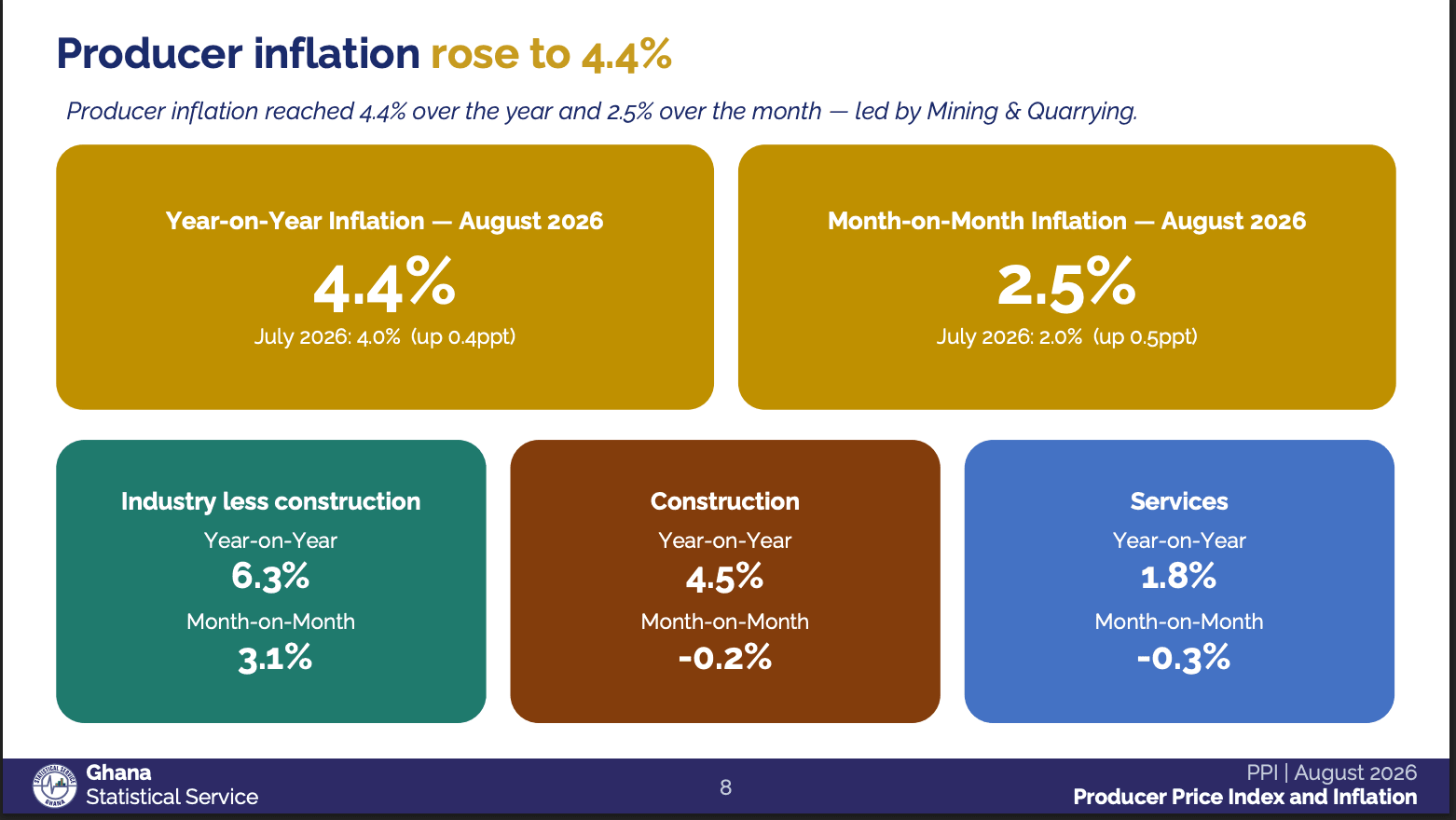
Mining leads producer inflation rise to 4.4% in August
Producer price inflation rose to 4.4 percent in August 2026, from 4 percent in July, with the Mining and Quarrying sector recording the largest contribution to the overall rate.

Education
Double-track linked to lower SHS quality — IEA poll
A majority of Ghanaians believe the Double-Track System has contributed to a decline in the quality of Senior High School (SHS) education
Comment guidelines
Please keep comments respectful. Use plain English for our global readership and avoid using phrasing that could be misinterpreted as offensive. By commenting, you agree to abide by our community guidelines and these terms and conditions. We encourage you to report inappropriate comments.
No comments yet. Be the first to share your thoughts.